
In today’s rapidly evolving business landscape, the essence of leadership is undergoing a transformative shift, propelled by the tidal wave of digital transformation. This new era demands a delicate equilibrium, where the integration of cutting-edge technology goes hand in hand with a profound commitment to humanity. Leaders are now at the forefront of navigating this dual focus, tasked with the challenge of driving innovation and efficiency while preserving the core organizational culture and ensuring the well-being of their teams. The digital age presents an array of challenges but also unprecedented opportunities for leaders willing to embrace change, adapt, and lead with a vision that harmonizes technology with human-centric values. This article aims to shed light on effective strategies that leaders can employ to navigate the digital landscape successfully, ensuring that technological advancements serve to enhance, rather than undermine, the human elements of leadership.
The Essence of Leadership in the Digital Age
Defining Digital Leadership
Digital leadership goes beyond mere proficiency in technology. It embodies a set of characteristics and competencies that enable leaders to guide their organizations through the complexities of digital transformation. Effective digital leaders are visionaries who can anticipate technological trends, strategize accordingly, and inspire their teams to innovate. They possess a deep understanding of digital technologies and how they can be leveraged to create value, improve efficiency, and foster competitive advantage. Yet, their strength lies not just in their technical acumen but in their ability to lead with empathy, understanding, and a commitment to the well-being of their people.
The Dual Focus
The digital age demands leaders who can adeptly balance technological prowess with emotional intelligence and human empathy. This dual focus is crucial for navigating the digital transformation successfully. Leaders must be technologically savvy, staying ahead of emerging trends and understanding their implications. Simultaneously, they must prioritize building and maintaining strong, trust-based relationships with their teams, customers, and stakeholders. This balance ensures that while organizations pursue technological advancements, they remain grounded in values that prioritize people, fostering a culture of innovation that is both inclusive and human-centric.
Navigating the Digital Transformation
Steering an organization through digital change presents a myriad of challenges. Leaders must contend with the fast pace of technological evolution, the disruption of traditional business models, and the need to drive adoption of new digital tools and processes. Additionally, they face the critical task of managing the impact of these changes on their people, ensuring that the digital transformation does not erode the organization’s culture or employee morale. Effective leadership in the digital age requires a clear vision, strategic foresight, and the ability to lead change empathetically, ensuring that the journey towards digitalization strengthens rather than dilutes the organization’s human essence.
Strategies for Balancing Tech and Humanity
Embracing Technological Advancements
Leaders can navigate the digital age by strategically embracing technological advancements, ensuring that these innovations align with the organization’s mission and values. This involves staying informed about the latest technological trends, evaluating their potential impact, and thoughtfully integrating them into the organization’s operations. Leaders should adopt a selective approach, choosing technologies that enhance efficiency and productivity without compromising the quality of human interactions or the well-being of their teams. By doing so, they can harness the power of technology to drive growth while maintaining a commitment to humanity.
Fostering a Culture of Innovation and Inclusion
Creating an environment where technological innovation thrives requires leaders to foster a culture of innovation and inclusion. This means encouraging creativity, experimentation, and the sharing of ideas, while ensuring that all voices are heard and valued. Leaders should champion diversity, equity, and inclusion, recognizing that a diverse and engaged workforce is a key driver of innovation. By cultivating a culture where employees feel supported in exploring new ideas and technologies, leaders can spark innovation that is both cutting-edge and deeply human-centric.
Prioritizing Employee Well-being
The integration of technology in the workplace must be approached with a keen focus on employee well-being. Leaders play a critical role in ensuring that digital tools and processes enhance rather than detract from the quality of work life. This involves implementing technologies that streamline workflows and reduce stress, offering training and support to ease the transition to new systems, and maintaining open lines of communication to address concerns and feedback. Additionally, leaders should promote work-life balance, recognizing the importance of disconnecting from technology to preserve mental and physical health. By prioritizing the well-being of their teams, leaders can ensure that the use of technology in the workplace supports a healthy, productive, and engaged workforce.
The Impact of Digital Leadership on Organizational Culture
Building Trust in a Digital Environment
In the digital age, where remote work and automated processes are becoming the norm, maintaining transparency and trust within the organization is paramount. Digital leaders must implement strategies that foster open communication and transparency to build and sustain trust. This includes regular and clear communication about company goals, decisions, and changes. Utilizing digital platforms for open forums and Q&A sessions can also help in making leadership more accessible and approachable. Encouraging feedback and actively demonstrating that it is valued and acted upon can further strengthen trust in a digital work environment.
Promoting Collaboration and Connectivity
Digital tools have the power to enhance team collaboration and connectivity, but they also present challenges in maintaining genuine human connections. Leaders should carefully select and implement digital tools that facilitate efficient communication and collaboration without overwhelming employees. Promoting the use of collaboration platforms that mimic face-to-face interactions can help in preserving the nuances of human communication. Establishing regular virtual team-building activities and encouraging informal virtual meetups can also foster a sense of community and belonging among remote teams.
Sustaining Organizational Values
In a tech-driven world, it is crucial for digital leaders to ensure that the organization’s core values are not only preserved but are also at the forefront of every decision and innovation. This involves integrating values into the digital transformation strategy, from the selection of technologies to the design of work processes. Leaders should consistently communicate and demonstrate these values in action, embedding them into the organizational culture. Recognizing and rewarding behaviors that align with these values can also reinforce their importance in a digital setting.
Guide to Aspiring Digital Leaders
Developing Digital Literacy
For leaders to effectively navigate the digital landscape, enhancing their understanding and proficiency with digital technologies is essential. This can be achieved through continuous learning and development programs focused on the latest digital trends and tools. Participating in workshops, webinars, and courses on digital technologies and their applications in business can provide valuable insights. Leaders should also engage with digital experts and tech teams within their organizations to gain hands-on experience and deeper knowledge.
Cultivating Empathy and Emotional Intelligence
Maintaining a focus on human-centric leadership amidst technological change requires a strong foundation in empathy and emotional intelligence. Leaders can cultivate these qualities by actively listening to their teams, showing genuine interest in their well-being, and understanding their perspectives. Regular check-ins, open communication channels, and creating a safe space for expressing concerns can help in building empathy. Additionally, practicing self-awareness and reflection on one’s leadership style and its impact on others can enhance emotional intelligence.
Leading by Example
Demonstrating a balanced approach to technology and humanity in daily leadership practices is crucial for inspiring the same values in the team. This involves making conscious decisions that reflect the integration of tech and human-centric principles, such as prioritizing well-being alongside productivity and using technology to enhance rather than replace human interactions. By leading by example, leaders can set a precedent for the entire organization, encouraging a culture that values both technological advancement and human connections.
Inspirational Examples of Digital Leadership
Satya Nadella, CEO of Microsoft
Satya Nadella has transformed Microsoft by focusing on a culture of empathy, innovation, and collaboration. Under his leadership, Microsoft has embraced cloud computing and AI, while also prioritizing accessibility and ethical technology use. Nadella’s approach demonstrates how technological advancements can be harmonized with a deep commitment to human values.
Jacinda Ardern, Prime Minister of New Zealand
While not a traditional tech leader, Jacinda Ardern’s leadership during the COVID-19 pandemic showcased the effective use of digital platforms to communicate transparently and build trust. Her empathetic leadership style, combined with the strategic use of technology to connect with citizens, offers valuable lessons in balancing tech and humanity.
Anne Wojcicki, CEO of 23andMe
Anne Wojcicki, co-founder and CEO of 23andMe, has pioneered consumer genetics testing, emphasizing the empowerment of individuals with knowledge about their health. Her leadership exemplifies how technology can be used to benefit humanity, prioritizing ethical considerations and consumer privacy in the rapidly evolving field of genetics.
These leaders exemplify the balance of tech and humanity, demonstrating that effective digital leadership is not just about technological proficiency but also about fostering an organizational culture that values innovation, empathy, and ethical responsibility.
Envisioning the Future of Leadership in a Digital World
The Evolving Role of Leaders
As we continue to navigate through the digital revolution, the role of leadership is undergoing a significant transformation. Leaders are no longer just decision-makers and visionaries; they are now required to be digital pioneers, change agents, and culture keepers. With the rapid pace of digital advancements, leaders are expected to stay ahead of technological trends, harnessing them to drive organizational growth and innovation while ensuring that the essence of their leadership remains deeply human-centric. The future demands leaders who are not only tech-savvy but also deeply empathetic, able to blend digital efficiency with human insight.
Challenges and Opportunities Ahead
The digital age presents a unique set of challenges and opportunities for leaders. One of the primary challenges is maintaining a human-centric approach in an increasingly tech-driven world, ensuring technology serves to enhance rather than diminish the human aspects of work. However, these challenges also present opportunities for innovation in leadership practices. Leaders have the chance to redefine collaboration, communication, and community within their organizations, leveraging digital tools to build stronger connections and foster a culture of inclusivity and engagement. The future of leadership involves navigating these challenges with a focus on creating a balanced, thriving organizational culture.
The Enduring Importance of Human Touch
Despite the relentless march of technology, the human touch remains an indispensable element of effective leadership. As digital tools and artificial intelligence become more embedded in our daily operations, the value of empathy, understanding, and genuine connection becomes more pronounced. Leaders who prioritize these human elements will be better positioned to inspire, motivate, and lead their teams through the complexities of the digital landscape. The essence of leadership, with its core of human connection, empathy, and ethical decision-making, will continue to be the cornerstone of organizational success, regardless of how advanced our technologies become.
Leadership Transformation in the Digital Era
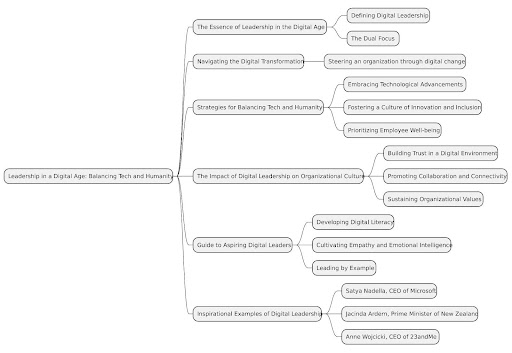
The advent of the digital age has ushered in a new paradigm for leadership, one that necessitates a harmonious blend of technological savvy and human-centric values. This article section, inspired by the accompanying diagram, delves into the essence of digital leadership and the multifaceted approach required to steer organizations through the complexities of digital transformation. It outlines the foundational elements of digital leadership, emphasizing the dual focus on leveraging technological advancements while fostering deep connections and trust within teams.
At the heart of effective digital leadership lies the capacity to define and exemplify a vision that encompasses both the potential of technology and the intrinsic value of human collaboration and empathy. This vision serves as a beacon, guiding teams through the intricacies of digital change, ensuring that technological integration amplifies rather than diminishes the organization’s core values and culture. The diagram highlights the critical role of leaders in not only navigating but also shaping the digital transformation, balancing the drive for innovation with the preservation of an inclusive, human-centric work environment.
Strategies for achieving this balance are multifaceted, ranging from embracing cutting-edge technologies to fostering a culture of innovation and prioritizing employee well-being. These strategies underscore the importance of creating an environment where technological advancements enhance operational efficiency and productivity without compromising the quality of workplace interactions or the mental and physical health of employees. Furthermore, the diagram illustrates the impact of such leadership on organizational culture, emphasizing the significance of building trust, promoting collaboration, and sustaining organizational values in a predominantly digital work environment.
For aspiring digital leaders, the diagram serves as a roadmap, offering insights into developing digital literacy, cultivating empathy, and leading by example. It underscores the transformative power of leadership that successfully integrates tech and humanity, drawing inspiration from exemplary figures who have navigated this path with distinction. These leaders exemplify how visionary leadership, underpinned by a commitment to both technological and humanistic principles, can drive organizations towards unparalleled success in the digital era.
In conclusion, the journey of leadership in the digital age is a delicate balancing act, requiring a deep understanding of both the opportunities and challenges presented by digital technologies. By embracing the principles outlined in the diagram, leaders can navigate this journey with confidence, ensuring their organizations not only survive but thrive, by fostering a culture that values innovation, inclusivity, and the well-being of all stakeholders.
FAQs About Leadership in a Digital Age
How can leaders stay abreast of technological trends without becoming overwhelmed?
Leaders can stay informed by curating their sources of information, focusing on reputable and relevant publications and thought leaders. Setting aside regular time for learning and encouraging a culture of knowledge sharing within their organizations can also help leaders stay updated without feeling overwhelmed.
What are effective ways to ensure technology enhances rather than replaces human interaction within teams?
Leaders can emphasize the use of technology as a tool to facilitate, not replace, human interaction. This involves choosing technologies that support collaboration and communication and setting boundaries to prevent digital overload. Encouraging regular in-person or video meetings can also help maintain personal connections.
How can leaders foster innovation while also maintaining a focus on ethics and humanity?
Fostering innovation with a focus on ethics and humanity requires leaders to set clear values and guidelines that prioritize ethical considerations and the well-being of individuals. Incorporating diverse perspectives and involving stakeholders in the innovation process can also ensure that technological advancements are aligned with human-centric principles.
What role does emotional intelligence play in digital leadership?
Emotional intelligence is critical in digital leadership as it enables leaders to navigate the complexities of leading in a digital environment with empathy, understanding, and effective communication. It enhances leaders’ ability to connect with their teams, understand their needs, and foster a positive organizational culture.
How can leaders manage resistance to digital transformation within their organizations?
Leaders can manage resistance by clearly communicating the vision and benefits of digital transformation, providing adequate training and support, and involving employees in the process. Recognizing and addressing concerns and feedback can also help in easing the transition.
In Conclusion
The digital age has undeniably reshaped the landscape of leadership, presenting both challenges and opportunities for leaders to navigate. As we look to the future, the essence of effective leadership in this new era will hinge on the ability to harmoniously blend technological advancements with the timeless human qualities of empathy, understanding, and ethical stewardship. Leaders who embrace this dual focus, leveraging digital tools to enhance human connections and drive innovation, while also prioritizing the well-being and development of their teams, will define the next chapter of organizational success. In embracing the digital landscape with a human-centric approach, the future of leadership is bright, marked by the potential to create more connected, innovative, and empathetic organizations.